When engineers ask, “what is the difference between hot rolled and cold rolled steel,” they usually expect a simple temperature-based answer. The real distinction reaches further. It affects surface finish, dimensional accuracy, strength, residual stress, cost, and fabrication behavior.
Hot rolled steel is shaped above its recrystallization temperature, often near 1,700°F for carbon steel. At this heat, the material moves like thick orange clay through large rollers. Cooling follows afterward, usually in open air. That process makes hot rolled products practical for beams, plates, railroad tracks, and welded frames. Edges may be slightly rounded. The surface can carry dark mill scale.
Cold rolled steel begins as hot rolled steel. It receives additional processing at room temperature, including skin passing, drawing, or rolling. Metallurgist John D. Verhoeven wrote, “Cold working increases the strength and hardness of steel.” That compact statement explains much of the difference. Cold rolling can produce tighter tolerances, a smoother surface, and improved yield strength. It can also increase internal stress and reduce ductility.
The choice is not automatically obvious. A visible scratch, a tight bend, or a demanding painted finish may change the decision. For a machine bracket, cold rolled sheet can feel precise and clean. For a heavy support, hot rolled steel may offer better value and easier forming.
There is no universal winner. Grade matters. So does thickness.
This guide compares both materials through manufacturing, performance, appearance, cost, and real workshop use. It also questions a common assumption: colder processing does not always mean better steel.
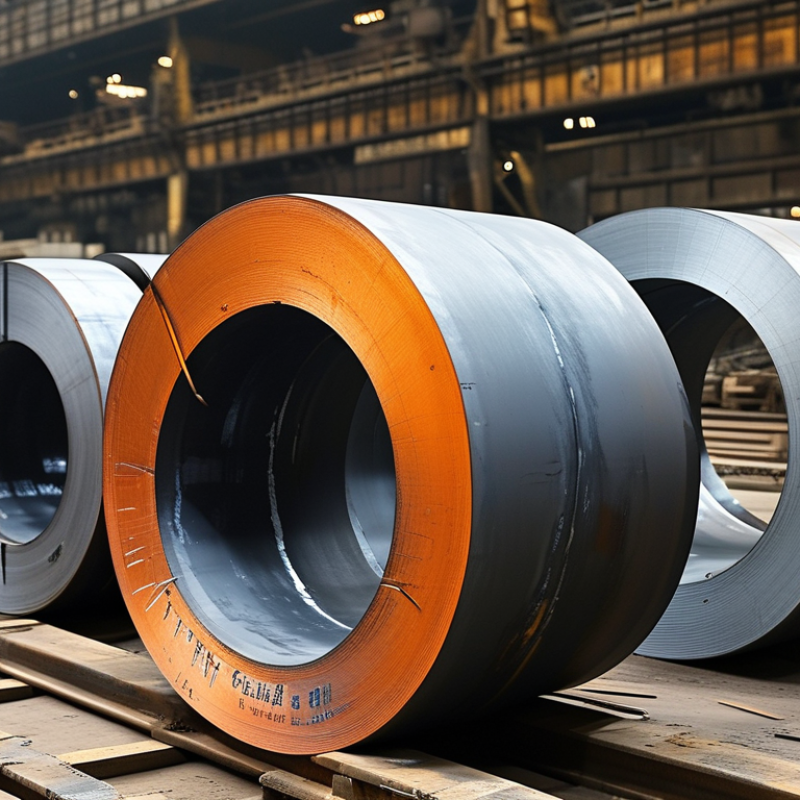
Hot-rolled and cold-rolled steel describe how steel is processed, not two completely different metals. Hot rolling shapes steel above its recrystallization temperature. The material leaves the mill with a rough, gray scale surface. Its edges may look slightly rounded. This method suits beams, plates, rails, and other large sections. The World Steel Association reported about 1.89 billion tonnes of crude steel production in 2023. That scale shows why efficient hot processing remains important worldwide.
Cold-rolled steel begins as hot-rolled steel. It passes through additional rollers near room temperature. The process improves surface smoothness, thickness control, and shape accuracy. A clean sheet can feel almost satin-like under a glove. Cold rolling also increases hardness and internal stress. Annealing may be needed afterward. ASTM material standards separate these conditions carefully, yet the boundary is not always neat. A supplier’s “cold-rolled” label may describe the final pass, not every earlier operation.
Tips: Match the process to the job. Choose hot-rolled steel for heavy frames, welding, and less visible surfaces. Choose cold-rolled steel for cabinets, panels, and tight dimensions. Check the mill certificate, thickness tolerance, yield strength, and surface condition. The World Steel Association’s World Steel in Figures 2024 is useful for production context, but it does not replace product-specific test data. Measure twice. Small assumptions can become expensive rework.
Hot rolling begins when steel slabs are reheated, often to 1,100–1,250°C. The material then passes through several rolling stands above its recrystallization temperature. Each pass reduces thickness and refines the cast structure. Water sprays control the finishing temperature before the strip is coiled. This process suits thick plate, structural sections, and coils with moderate dimensional tolerances. Scale remains on the surface.
Cold rolling starts with pickled hot-rolled coil. At near-room temperature, rolls impose plastic deformation without recrystallization. Thickness reductions commonly range from 20% to 80%, depending on grade and equipment. The steel becomes stronger but less ductile. Annealing can restore formability, while skin-pass rolling improves flatness and surface appearance. Cold does not mean frozen.
Scale matters. The World Steel Association reported 1,888.2 million tonnes of crude steel production in 2023 (World Steel in Figures 2024). This shows the industrial importance of both routes. Yet high output does not ensure identical performance. Chemistry, reheating time, reduction schedules, lubrication, and cooling all influence the final result. In practice, choosing by “smooth versus rough” alone causes mistakes. Check yield strength, bend radius, surface cleanliness, and dimensional tolerance against the drawing. Process charts simplify reality. Mill data deserves a second look.
Hot rolled steel is shaped above its recrystallization temperature, often leaving a dark mill scale on the surface. Its edges may look slightly rounded, and thickness can vary more across the sheet. These features usually suit beams, frames, plates, and other applications where appearance is less critical. The surface feels rougher after processing. It also shows more visible distortion after cooling.
Cold rolled steel is processed at room temperature after hot rolling and cleaning. This extra work produces a smoother, cleaner surface with sharper edges. More importantly, it offers tighter dimensional accuracy and better control of flatness. That makes it useful for cabinets, panels, precision components, and exposed parts. However, cold rolling can introduce residual stress. A sheet may look flat, then shift slightly during cutting or forming. The common rule is helpful, but it is not absolute.
Check the required thickness tolerance, surface finish, and final shape before choosing material. Measure several points, not just one corner. Ask for the mill certificate and inspection records when consistency matters. For painted parts, hot rolled steel may need additional surface preparation. For visible components, cold rolled steel often reduces finishing work. Still, test a sample first. Real fabrication results can differ from the datasheet.
Hot rolled and cold rolled steel share the same basic material, but their processing creates different strengths and limitations. Hot rolled steel is formed above its recrystallization temperature. It cools naturally, leaving a rougher surface, rounded edges, and looser dimensional tolerances. It usually costs less and suits beams, rails, frames, agricultural equipment, and heavy structural parts. It handles large shapes well.
Cold rolled steel receives additional rolling at room temperature, often followed by annealing. This process improves surface finish, thickness accuracy, and forming consistency. Work hardening can raise yield strength, but cold rolling does not automatically make every grade stronger. ASTM A1008/A1008M and ASTM A1011/A1011M show why grade-specific testing matters. A buyer should check yield strength, tensile strength, elongation, and bend performance instead of trusting the process name.
The difference becomes visible on a factory floor. Hot rolled plate may show mill scale and need cleaning before painting. Cold rolled sheet can arrive smooth enough for visible panels, cabinets, and precision components. The trade-off is not elegant. Cold rolled steel generally costs more and may become less formable after heavy reduction. World Steel Association data reports 1,888.2 million tonnes of crude steel production in 2023, showing the scale of this industry, not a reason to choose one process blindly. In practice, I have seen specifications overvalue appearance and undervalue welding distortion. That mistake deserves a second review.
| Comparison Dimension | Hot Rolled Steel | Cold Rolled Steel | Practical Significance |
|---|---|---|---|
| Basic definition | Steel shaped by rolling at temperatures above its recrystallization temperature, commonly around 900–1,200°C depending on grade and process. | Steel further reduced or finished at room temperature after hot rolling, often with annealing and temper-pass operations. | “Cold rolled” describes a finishing and reduction process, not necessarily steel produced entirely without heating. |
| Typical product forms | Plate, structural sections, bars, rails, coils, and sheet. | Sheet, strip, and coil; commonly supplied in thinner gauges with controlled surface finishes. | Hot rolling is well suited to large and thick sections; cold rolling is mainly used for sheet and strip products. |
| Dimensional accuracy | Moderate. Cooling can cause scale formation, dimensional variation, and greater residual shape irregularity. | High. Additional rolling and controlled finishing generally improve thickness, flatness, and width consistency. | Cold rolled material is preferred when close dimensions and consistent fit are important. |
| Surface appearance | Rougher, duller, and often covered with mill scale formed during high-temperature processing. | Smoother and cleaner, with a more uniform appearance; available in bright, matte, or other controlled finishes. | Cold rolled steel usually requires less surface preparation for visible or painted components. |
| Strength and hardness | Often more ductile in the as-rolled condition, although actual strength depends primarily on the grade, chemistry, and cooling treatment. | Cold working can increase yield strength and hardness, especially in non-annealed products. | Cold rolled steel is not automatically stronger in every specification; grade and temper condition must be compared. |
| Ductility and formability | Generally favorable for large forming operations and structural fabrication, subject to grade and processing history. | Annealed grades can offer excellent formability; full-hard products are less ductile because of work hardening. | Select the temper condition carefully when deep drawing, bending, or stamping is required. |
| Residual stress and shape | May show camber, waviness, warping, or variable flatness caused by high-temperature cooling. | Usually offers better flatness and shape control, but residual stresses can be introduced during cold reduction. | Stress-relieved or properly leveled material may be needed for precision parts. |
| Production cost | Typically lower for general-purpose sections and heavier products because it requires fewer finishing steps. | Typically higher because of additional rolling, annealing, leveling, surface treatment, and inspection. | Hot rolled steel is often the economical choice when appearance and tight tolerances are not critical. |
| Weldability | Common low-carbon hot rolled grades are generally weldable using appropriate procedures. | Common low-carbon grades are also generally weldable, but surface coatings, residual stress, and increased hardness may affect fabrication. | Welding parameters should be based on the material grade, thickness, coating, and applicable standard. |
| Corrosion considerations | Mill scale offers limited temporary protection but is not a reliable long-term corrosion barrier; exposed steel can rust. | The smoother surface is easier to clean and coat, but uncoated carbon steel can also corrode. | Neither type is inherently corrosion-proof; painting, plating, galvanizing, or alloy selection may be required. |
| Typical applications | Building frames, bridges, rail components, heavy equipment, agricultural machinery, truck frames, pipes, brackets, and general fabrication. | Automotive panels, appliances, furniture, cabinets, electrical enclosures, precision brackets, office equipment, and visible sheet-metal parts. | The selection depends on required thickness, tolerances, surface quality, forming behavior, and total fabrication cost. |
| Main strengths | Lower cost, broad size availability, efficient production of thick sections, and good suitability for structural work. | Smooth finish, tighter dimensional control, improved flatness, and the ability to achieve higher strength through controlled cold work. | Use hot rolled steel for function and scale; use cold rolled steel when precision and appearance add value. |
| Main limitations | Less precise dimensions, rougher surface, mill scale, and possible shape variation after cooling. | Higher cost, limited availability of very thick sections, possible work-hardening effects, and greater sensitivity to forming or residual-stress issues. | Material certificates and product standards should be checked before final design or procurement. |
Note: Actual mechanical properties, thickness ranges, tolerances, surface grades, and formability vary by steel grade, temper, thickness, heat treatment, and applicable standard.
Choosing between hot-rolled and cold-rolled steel starts with the part’s working conditions, not appearance alone. Hot-rolled steel is formed at high temperatures, so it suits beams, plates, frames, and other structural parts. Its surface may show scale, rounded edges, and wider dimensional variation. That is often acceptable after grinding, coating, or welding.
Cold-rolled steel receives additional processing at room temperature. It usually offers tighter thickness control, straighter edges, and a smoother surface. These qualities help with cabinets, panels, brackets, and visible components that require accurate fitting. It also supports cleaner bending and forming, although excessive forming can cause cracking if the grade is unsuitable. Check the material certificate and forming recommendations before production.
A simple rule can mislead.
Choose hot-rolled steel when strength, section size, and cost matter more than surface finish. Choose cold-rolled steel when appearance, dimensional accuracy, or repeatable assembly matters. In workshop practice, I compare the drawing tolerance, bend radius, welding plan, and finishing method together. A smooth surface does not automatically mean better performance. Cold-rolled material can still corrode without proper protection, while hot-rolled steel may perform reliably after surface preparation. I have seen projects select cold-rolled sheets for a rough outdoor frame, then spend more on repairs and coatings. Recheck the environment, load, and fabrication process before ordering.
Hot-rolled steel is shaped above its recrystallization temperature. It cools naturally after leaving the mill. Its surface usually has gray scale, rounded edges, and looser dimensions.
Cold-rolled steel starts as hot-rolled steel. It passes through additional rollers near room temperature. The result is smoother, more accurate, and often harder.
Hot-rolled steel usually suits beams, rails, frames, and heavy plates. It handles large sections well. Rough surfaces are less important there.
Cold-rolled steel is often better for cabinets, doors, and visible panels. Its surface can feel nearly satin-like under a glove. Appearance still needs inspection.
No. Cold rolling can increase hardness and yield strength through work hardening. However, strength depends on the grade and later heat treatment. Do not trust the process name alone.
Heavy cold reduction can create internal stress and reduce formability. Annealing can soften the material and improve forming performance. The exact need depends on the specification.
Hot-rolled steel may show mill scale and a rough, gray finish. Cold-rolled steel is smoother and cleaner. Hot-rolled surfaces may need cleaning before painting.
Check the mill certificate, thickness tolerance, yield strength, tensile strength, elongation, and surface condition. Also review bend performance and welding needs. Measure twice. Small assumptions can cause expensive rework.
Hot-rolled and cold-rolled steel are produced through different rolling methods, which affect their appearance, accuracy, strength, and applications. Hot-rolled steel is shaped at high temperatures, making it easier to form and suitable for large structural components, beams, rails, machinery parts, and general fabrication. It usually has a rougher surface, less precise dimensions, and may develop slight distortion as it cools. Cold-rolled steel is further processed at or near room temperature after hot rolling. This additional treatment produces a smoother surface, tighter dimensional tolerances, and a cleaner, more consistent shape.
Understanding what is the difference between hot rolled and cold rolled steel helps buyers select the right material for a project. Hot-rolled steel is often preferred when cost, workability, and structural performance are the main priorities. Cold-rolled steel is a better choice when appearance, accurate sizing, surface quality, and improved strength are important. The final decision should consider forming requirements, environmental conditions, finishing needs, and the intended use of the steel.

Ramparts BuildCore