How to Distinguish Between Seamless and Welded Steel Pipe?

Time:2026-04-07 Author:Charlotte
0%

When exploring the question "what is the difference between seamless and welded steel pipe," industry experts provide valuable insights. John Anderson, a renowned materials engineer, states, "Understanding the distinctions helps in selecting the right pipe for the job." This statement underscores the importance of knowing these differences for practical applications.

Seamless pipes are formed by drawing solid steel into a hollow tube. This process results in higher pressure ratings and better resistance to corrosion. On the other hand, welded pipes are made by joining flat steel plates into a tubular shape, which can create potential weak points. These differences impact durability and usage in various industries, from construction to oil and gas.

In evaluating seamless versus welded pipes, careful consideration is crucial. Each type serves specific needs depending on operational demands. Nonetheless, some may rush to choose based on cost alone. It's vital to reflect on long-term implications, including maintenance and replacement costs, which can influence project success significantly. Understanding these factors is key in answering "what is the difference between seamless and welded steel pipe?" and making informed decisions.
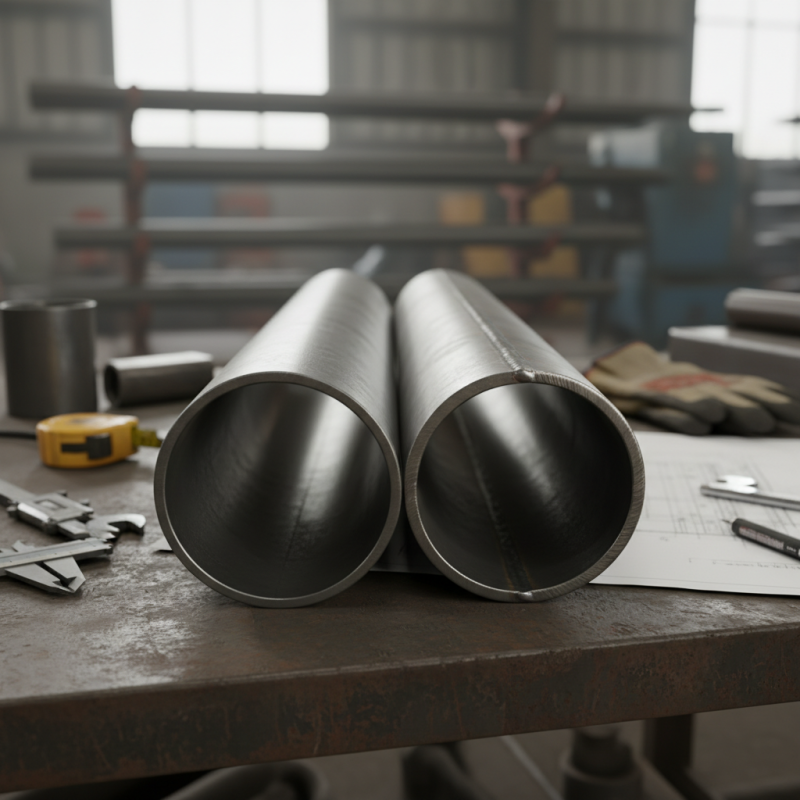
How to Distinguish Between Seamless and Welded Steel Pipe?

Understanding the Basics of Steel Pipe Manufacturing Techniques

Understanding the basics of steel pipe manufacturing techniques is essential for anyone in the construction or manufacturing industries. Steel pipes can be categorized into two primary types: seamless and welded. The creation methods for these pipes differ significantly, leading to various applications and performance characteristics.

Seamless pipes are produced from solid round steel billets. These billets are heated and pierced, transforming them into hollow tubes. This technique results in a uniform structure without weld seams, enhancing strength and reducing the risk of leaks.

In contrast, welded pipes start as flat sheets of steel. The sheets are rolled and then welded together, forming a pipe. This method is generally more cost-effective but can lead to weaknesses at the weld points.

Understanding how these differences affect performance is crucial. Seamless pipes are more suitable for high-pressure applications. However, the cost and production time can be higher. Welded pipes, while cheaper and quicker to produce, may pose risks in critical applications. Awareness of these factors helps professionals make informed decisions about which type of pipe to use for specific projects.

Key Differences Between Seamless and Welded Steel Pipes

When deciding between seamless and welded steel pipes, it’s essential to recognize their distinct features. Seamless pipes are created from solid steel billets. They are heated and then drilled to form a continuous tube. This manufacturing process grants seamless pipes superior strength and durability. They are less likely to fail under high pressure.

In contrast, welded pipes are produced by rolling and welding flat steel plates. This process makes them easier to manufacture and generally cheaper. However, the weld seam can be a weak point. Over time, welded pipes may experience degradation along the seam. Choosing between the two often depends on the specific application and required pressure ratings. Assess the environmental factors that will impact the pipes over time.

Different applications may necessitate different pipe types. For instance, seamless pipes excel in high-pressure applications like oil and gas. In contrast, welded pipes may serve well in low-pressure systems. It's crucial to consider factors like material quality and pipe design. More often than not, the best choice lies in a careful evaluation of the project requirements.

Comparison of Seamless and Welded Steel Pipes

Common Applications for Seamless versus Welded Steel Pipes

When it comes to steel pipes, seamless and welded types have distinct applications. Seamless pipes, made from a solid round steel billet, offer higher strength and durability. Their lack of seams makes them ideal for high-pressure applications. Industries like oil and gas often prefer seamless pipes for pipelines and fittings that require reliability under extreme conditions.

Welded pipes, on the other hand, are created by welding together flat strips of steel. They are economical and often used in low-pressure situations. You’ll find welded pipes in structures and non-critical applications. While they might not perform as well under high stress, they serve well in various construction projects.

Both pipe types have their place in the market. Choosing between them depends on specific project needs. Understanding these differences can help in making informed decisions. Some may overlook important factors, like cost versus performance. Ultimately, reflecting on the application will guide the right choice for your project.

Factors Affecting the Choice Between Seamless and Welded Pipes

When choosing between seamless and welded steel pipes, several factors come into play. The application of a project significantly impacts this decision. For high-pressure situations, seamless pipes are preferred due to their strength and uniformity. Data suggests that seamless pipes can withstand higher pressure levels compared to welded options, making them ideal for critical applications in oil and gas industries.

Welded pipes may be more cost-effective and can be produced in larger diameters. However, variability in quality can occur due to the welding process. According to industry reports, up to 30% of welded pipes may experience defects if not properly inspected. This raises concerns about their reliability in certain environments.

Tips: Consider the pressure and temperature requirements of your project. Analyze the risks of using welded pipes in high-stress situations. Quality control and inspection are crucial in the welding process. Remember, choosing the right type involves weighing cost against performance and reliability.

Inspection and Testing Methods for Steel Pipe Quality Assurance

When it comes to ensuring the quality of seamless and welded steel pipes, inspection and testing methods play a vital role. According to industry data, approximately 30% of pipe failures can be traced back to defective welds. This highlights the importance of rigorous testing.

Non-destructive testing (NDT) methods are commonly employed. Techniques such as ultrasonic testing and radiographic inspection evaluate the integrity of welds and the overall pipe structure.

Moreover, mechanical testing is crucial for determining the tensile strength and ductility of the pipes. The American Society for Testing and Materials (ASTM) provides guidelines for these tests. For example, a yield strength test may reveal weaknesses that could lead to failure under pressure. In fact, research indicates that seamless pipes generally offer higher pressure tolerance compared to welded pipes, making them a preferred choice in critical applications.

However, relying solely on testing methods may not cover all quality issues. Even with robust NDT, some defects can go undetected. This raises questions about the testing protocols in place. Regular audits of testing processes and equipment can help ensure standards are upheld. As the industry advances, embracing new technologies in pipe testing is essential for improving reliability and safety.

FAQS

: What are the two main types of steel pipes?

: The two main types are seamless and welded pipes.

How are seamless pipes made?

Seamless pipes are made from solid round steel billets that are heated and pierced.

What is a major advantage of seamless pipes?

Seamless pipes have no weld seams, enhancing strength and reducing leak risks.

How are welded pipes manufactured?

Welded pipes start as flat steel sheets, which are rolled and welded together.

What is a drawback of welded pipes?

The weld seam can be a weak point, leading to possible degradation over time.

When are seamless pipes preferred?

Seamless pipes are preferred for high-pressure applications like oil and gas.

Why are welded pipes more cost-effective?

Welded pipes are easier and quicker to manufacture, making them cheaper.

What factors should be considered when choosing pipe types?

Consider application, pressure ratings, material quality, and environmental factors.

Can welded pipes be used in critical applications?

While they can be used, they may pose risks due to weak weld points.

Is it always easy to choose between seamless and welded pipes?

No, it requires careful evaluation of project requirements and conditions.

Conclusion

The article "How to Distinguish Between Seamless and Welded Steel Pipe?" provides a comprehensive overview of different steel pipe manufacturing techniques. It begins by explaining the fundamental processes involved in creating these pipes, emphasizing the distinction between seamless and welded varieties. The key differences include structural integrity, manufacturing methods, and specific applications, as seamless pipes are generally preferred in high-pressure environments, while welded pipes are more economical for lighter applications.

Additionally, the article discusses factors that influence the choice between seamless and welded pipes, such as cost, strength requirements, and application needs. It also outlines various inspection and testing methods used to ensure the quality of steel pipes. By addressing the question of "what is the difference between seamless and welded steel pipe," the article offers valuable insights for professionals in industries that rely on these materials.

Charlotte

Charlotte

Charlotte is a seasoned marketing professional with a deep understanding of the company's portfolio and a passion for elevating its presence in the market. With a keen eye for detail and a commitment to excellence, she ensures that our professional blog is regularly updated with insightful articles......